
See Box 7-2 for an adapted list of Redelmeier and Detsky’s physician strategies to prevent alcohol-impaired driving. The following sections discuss the roles and accountabilities of stakeholders who https://ecosoberhouse.com/ play a role in reducing alcohol-impaired driving fatalities. In some cases, the committee makes recommendations to specific stakeholders to accelerate progress.
What Is the Definition of Drunk Driving?
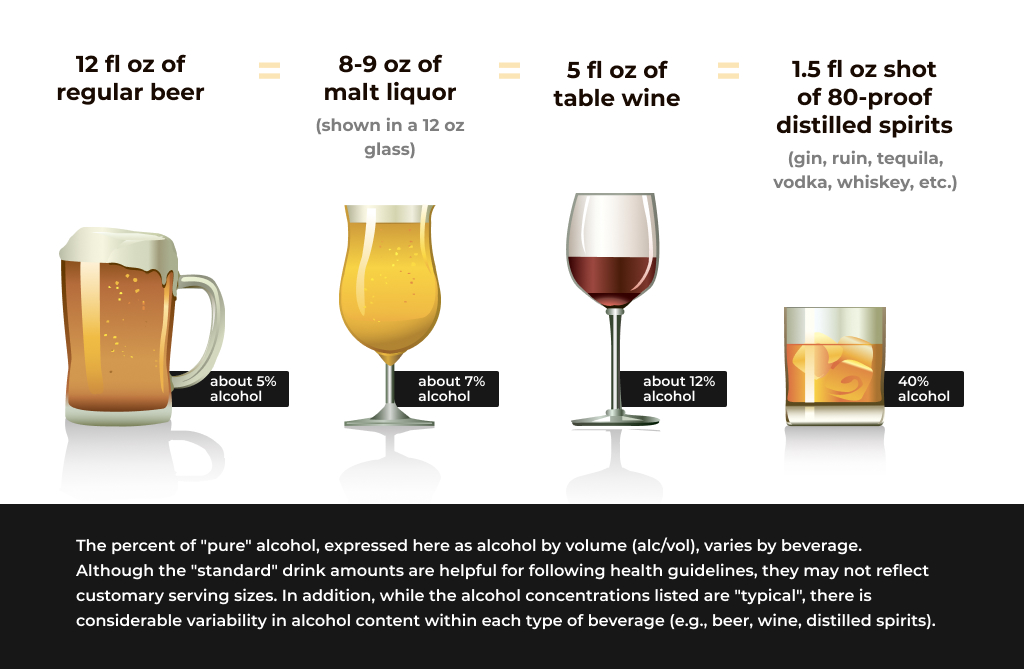
- The way that beverages are ordinarily served in individual drinks greatly reduces these disparities in alcohol concentration.
- Personality traits such as sensation-seeking, hostility, and psychopathic deviance have been linked to drink-driving behaviours.
- In many cases, drinking can act more as a justification or excuse for destructive behavior than as a root cause of that behavior.
§§§§ Much, but not all, of the information in this guide also pertains to the problem of driving under the influence of other controlled substances. The key stakeholders for reducing drink–driving accidents are the police; they are responsible for enforcing drink–driving laws and for generally stepping up drink–driving countermeasures. BAC limits are most effective when enforcement is consistent and highly visible, when detection social alcoholism of violation results in penalties that are certain, swift and sufficiently severe, and when supported by effective public education campaigns. Among the largest, note Aaron and Musto, was alcohol used legally in industry.
- Most drunk drivers are more heavy drinkers or have drinking problems and those under the age of 21 years are twice as likely to be involved in fatal vehicle crashes when they’re older.
- However, some populations are more likely to get behind the wheel of a car after drinking.
- Y-axis displays the survey adjusted prevalence for the corresponding outcome.
Sampling and Data Collection
Legal fees and fines, property damage, and increased insurance costs are the least devastating of the financial impacts that result from drunk driving. Alcoholics Anonymous Teenagers’ brains are still developing, which makes them more susceptible to adverse physical and mental health effects. DUIs refer to citations issued by law enforcement to those drinking and driving over the legal limit. People with unhealthy alcohol use (also called alcohol use disorder or AUD) can’t always predict how much they will drink, when they will stop, or what they will do while drinking. And it can be common for people with alcohol use disorder to deny the negative effects of drinking or that they even have a problem. Being able to “hold one’s liquor” is often a point of pride, but it can have dangerous consequences.
Final Models
With respect to drinking-related policies, the variation in state regulation is a direct outcome of the Twenty-First Amendment. After the repeal of Prohibition, it was concluded that a uniform, nationwide alcohol control policy would not suit the heterogeneous makeup of the country (Fosdick and Scott, 1933). Moving forward, each state adopted the alcohol control policies and regulations most suitable for its respective local population. This is the underpinning of the patchwork of policies and regulation that is visible across the nation today (Schmidt, 2017).
Legal Age Limits and their Impact on Underage Drinking
Another standard way to assess the average consumption of alcohol in a given area is to divide the total amount of alcohol sold in that area by the area’s adult population. The resulting per capita consumption rate can be skewed by large numbers of tourists, by the importation or exportation of alcohol (border-crossing “liquor runs,” for example), and by unreported production (including production at home). But over a large area, such as an entire country, per capita consumption can be estimated fairly well. The way that beverages are ordinarily served in individual drinks greatly reduces these disparities in alcohol concentration.
It’s better to lower one’s odds by sticking to a low-risk drinking pattern or just not drinking at all. Yet, different alcoholic beverages contain different amounts of alcohol and serving sizes can vary, so these limits may be confusing on their own. This means that for a wine that is 12% alcohol, 5 ounces would be a standard drink.